
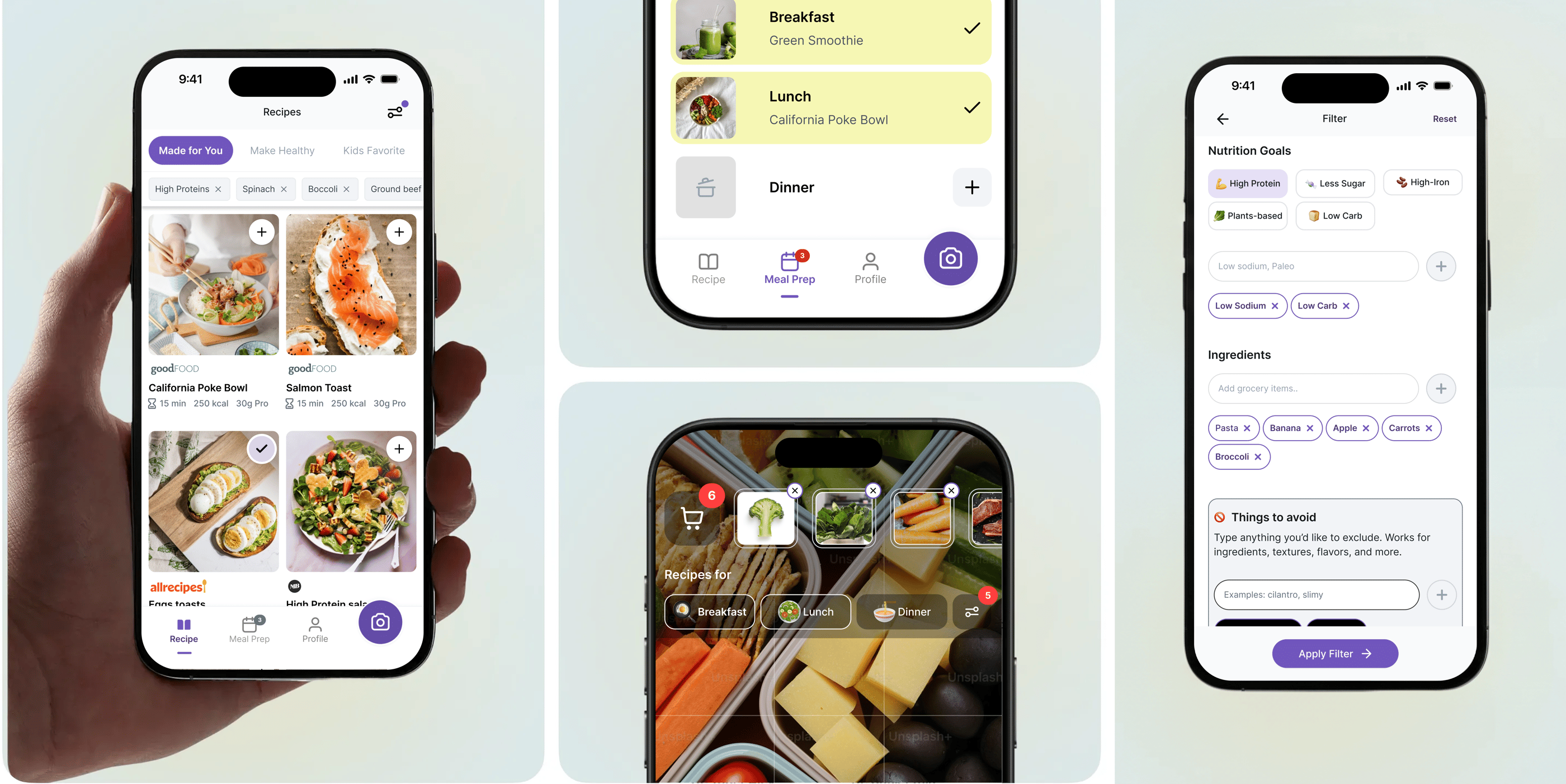
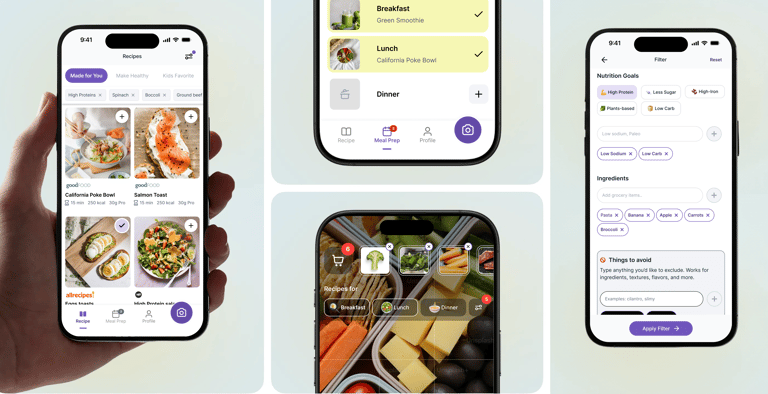
Portion needs, picky eaters, and busy schedules — all in the same household.
79 %
Mealtime in family households is a daily negotiation — picky eaters, dietary restrictions, and competing preferences make it genuinely stressful. I led the UX for an AI-powered meal planner that helps families discover personalized recipes based on what they already have at home, reducing the mental load of deciding what to cook. In validation testing with 20 U.S. parents, 97% said they'd try the app and 90% were willing to pay for it.
AI-Powered Family Meal Planner
of participants rated the app as highly unique — most citing the AI's ability to generate personalized recipes directly from fridge and pantry photos as something they'd never seen before.
My Role
Timeframe: Oct-Dec 2025
UX designer
Led initial user interviews to understand core family meal-planning pain points
Created rapid concept sketches and low-fidelity prototypes to validate the problem space early
Leveraged quick-design tools (e.g., Google Stitches) to explore solutions efficiently before moving into mid-fidelity design
Partnered closely with PM and engineering to ensure concepts were feasible and aligned with project timelines
Responsibilities
Tools Used
Team: 1 PM, 1 front-end, 1 back-end
Google Stitch (Google's internal rapid design exploration tool) — used for quick visual inspiration and early UI direction before committing to Figma
Figma — mid and high-fidelity design and interactive prototypes
Figma Make — built lightweight prototypes quickly for developer alignment and early stakeholder reviews, allowing us to validate direction before full build
Dscout — chosen for its ability to run asynchronous, unmoderated research with highly targeted participant recruitment, which was essential for reaching our specific audience of U.S. parents
Problem Statement (Why We Did This)
Families struggle to find meals that everyone will genuinely enjoy. Differences in taste, dietary needs, and preferences make it hard to cook something that satisfies everyone every day, turning an essential daily ritual—mealtime—into a stressful challenge.








Jobs to Be Done (JTBD)
As the parent responsible for meals, I want the food I prepare to be genuinely enjoyed by everyone in my family — even with their different tastes, dietary needs, and preferences — so that mealtime feels like something we all look forward to, not a daily negotiation I dread.
Our initial research suggested that families needed help with meal planning. We noticed this through two main sources:
Behavioral patterns in existing apps:
Families using our task management and calendar apps frequently asked for help with meals and recipes. They often took photos of food at home and added follow-up notes in their calendars to plan meals. This behavior suggested an unmet need around meal organization and planning.


Discovery: Uncovering the Real Family Meal Challenge


Task management on the left, calendar on the right.


Early user interviews:
In conversations with families, participants confirmed that meal planning was a frequent and time-consuming task. They valued tools that could reduce mental load and give them a sense of control and confidence in managing their busy schedules.


However, as we expanded our research—conducting in-depth interviews with 28 families using dscout—we discovered that the core challenge wasn’t just planning meals. Families were less concerned with scheduling and more concerned with finding meals that everyone actually enjoys. Different tastes, dietary needs, and preferences made mealtime stressful and challenging. Families wanted customization and flexibility, not just a structured plan.
Key Insight:
Meal planning is a high-frequency task, but the real need is creating meals that satisfy everyone in the household, giving families confidence that mealtime is enjoyable, manageable, and stress-free.



Storyboards









Children sit at the table, frowning at their plates. Every day is a challenge many parents face—picky eaters and different preferences make meal planning a constant balancing act.
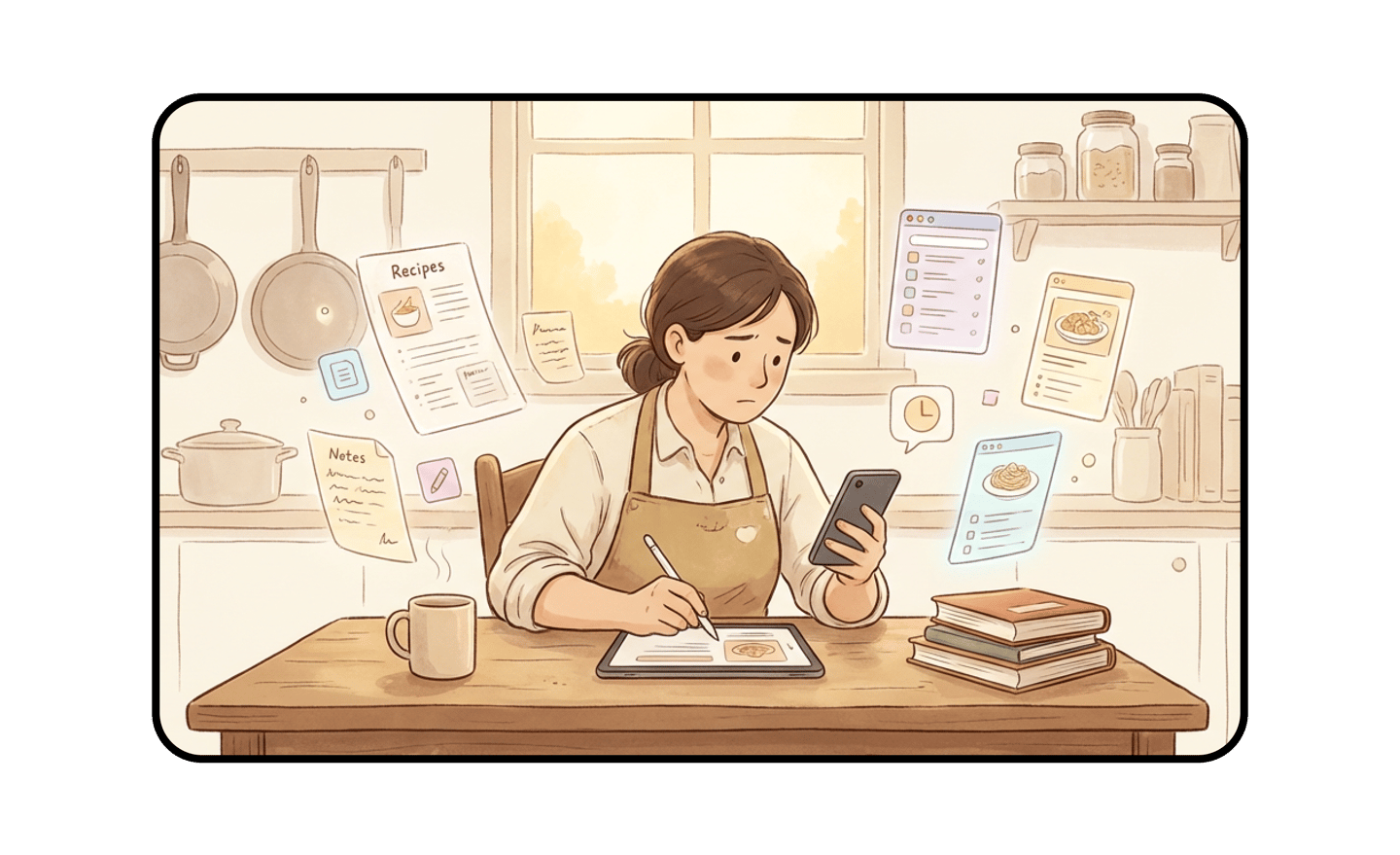
"“I wish I could find all the recipes in one place—it takes so long to search everywhere."
We all have picky eaters at home
Searching for Recipes
Customizing Portions
She has to adjust portions and ingredients to fit the number of people at home. Customizing each meal takes careful attention and extra time.
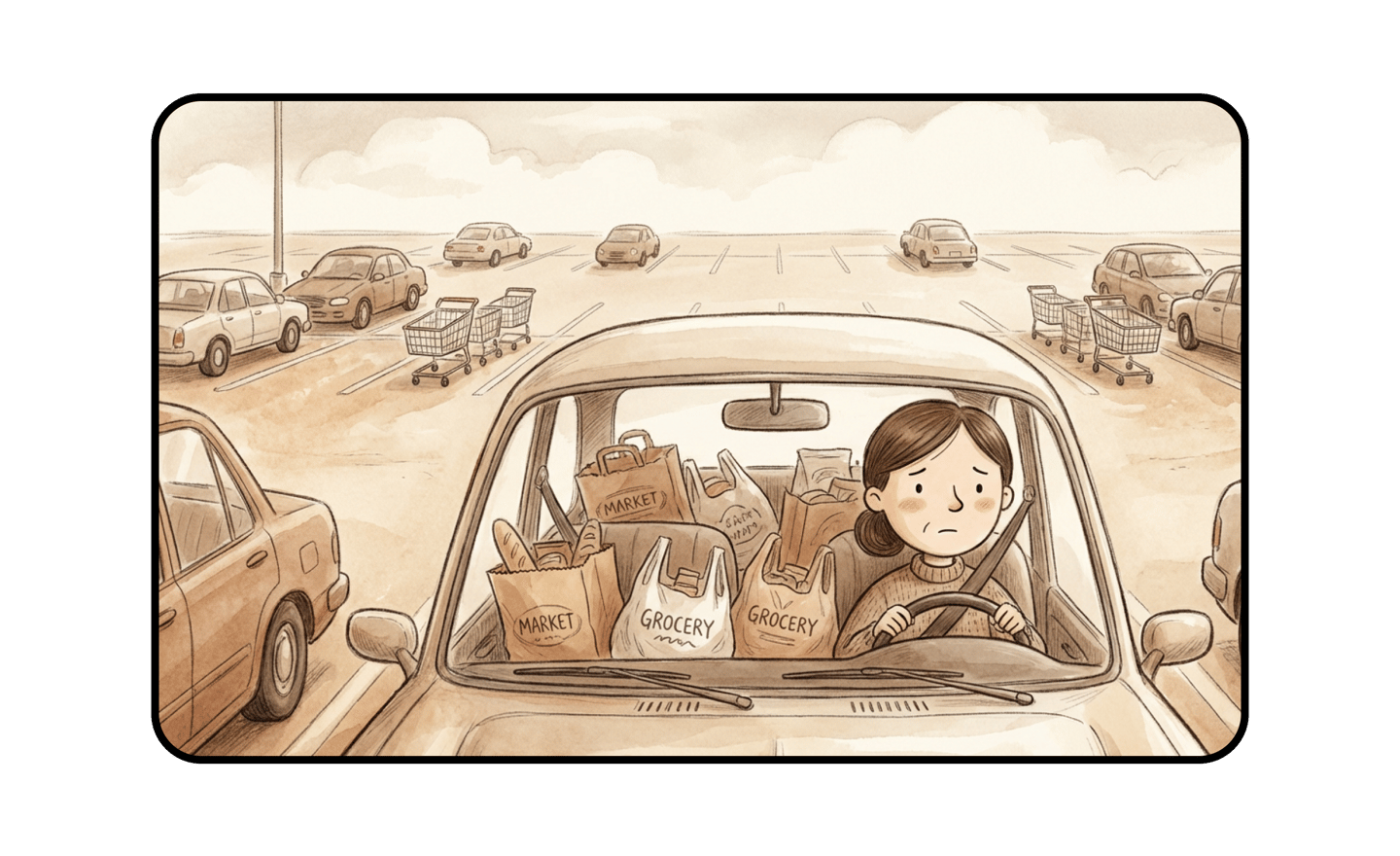
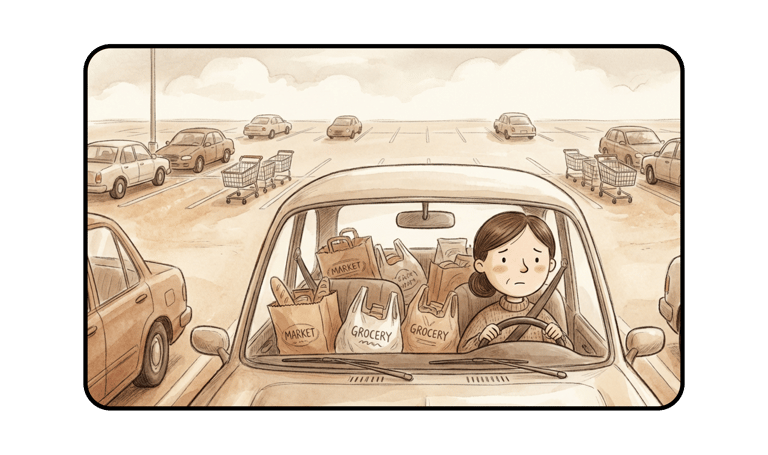
More than one grocery runs
“I wish I didn’t have to run to so many stores just to get all the ingredients.”
Catering to Dietary Needs
Recipes Reliability
She cooks meals that are dairy-free or rich in iron, carefully adjusting dishes to meet everyone’s dietary needs for each meal.
She tastes a dish she prepared from an online recipe, concerned it might not turn out well. Finding trusted recipe sources is challenging, and achieving reliable, tasty results requires extra care.
These illustrations come from real interviews with families and home cooks. They reflect common challenges faced across a variety of households.
📱 This led to the recipe preferences and customization feature, allowing each family member's likes and dislikes to be saved and applied to every recipe suggestion.


📱 This led to AI-curated recipe discovery, where the app surfaces relevant recipes from multiple trusted sources in one place, filtered to match the family's preferences.

📱 This led to the family size selector, letting users scale any recipe instantly without manual calculation.

📱 This led to Instacart integration on the recipe page, where family members can view the ingredient list, assign items to each other, and order missing ingredients without leaving the app.

📱 This led to dietary preference filters in recipe search, so users can specify needs like dairy-free, high-iron, or low-carb and receive only recipes that work for everyone.

📱 This led to sourcing recipes exclusively from reputable cooking sites — Allrecipes, Good Food, NYT Cooking, and others — filtered by ratings and reviews, so families can cook with confidence.
Design Decision >>
Design Decision >>

Challenges


AI Needs More Than One Image
One photo of the fridge or pantry isn’t enough for the AI to create an accurate ingredient list because it won’t be able to capture items that are behind a jar or a pasta container.
Making Meal Prep Seamless for Users
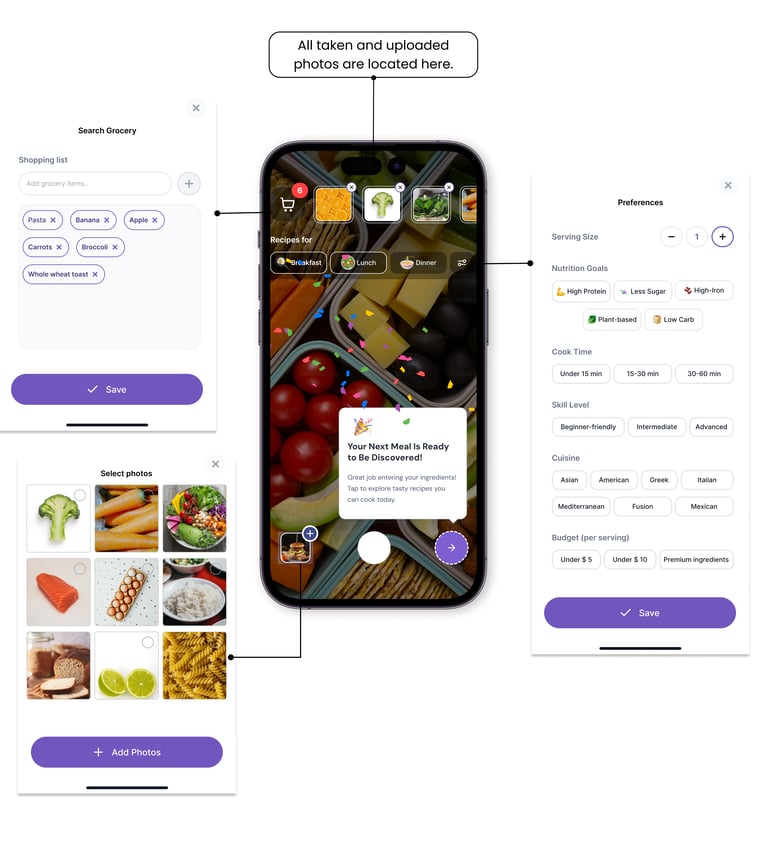
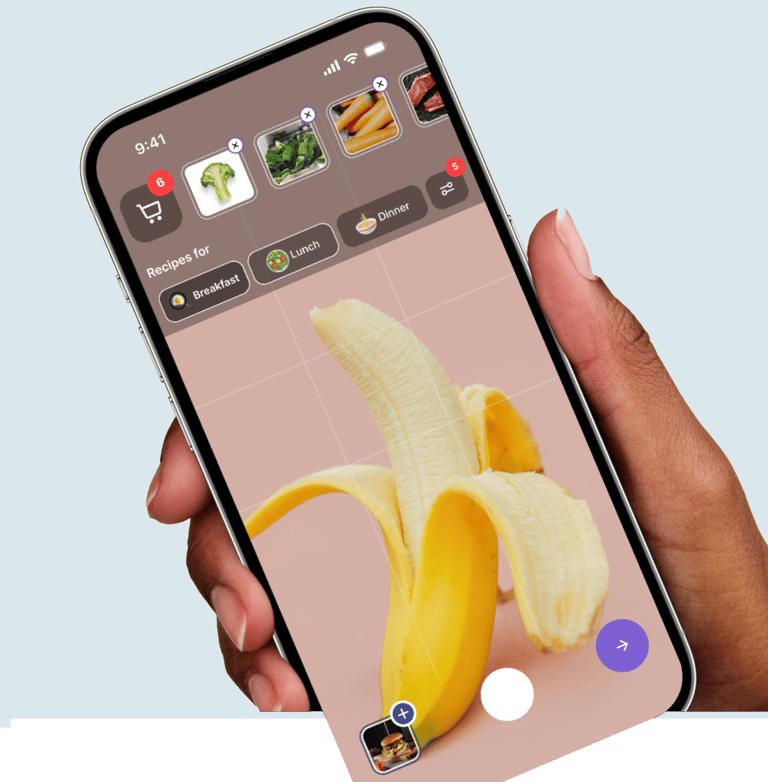
After speaking with target users, the design was updated to reflect their needs, including shopping lists, ingredient images, and recipe customization options. Rather than making weekly meal prep a separate pop-up, we decided it should appear directly whenever users access the camera in the app.
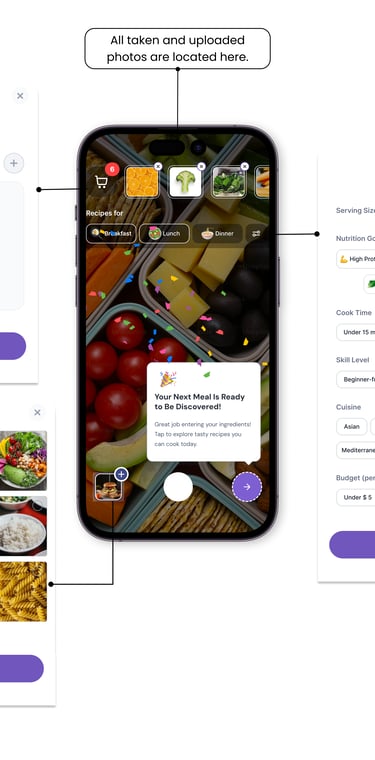
Helping Users Get Started
Since users might not know where to start the first time, we included a tooltip-based first-time UX tutorial to guide them. (Prototype below)
Solution
From Multi-Step Flow to One Screen
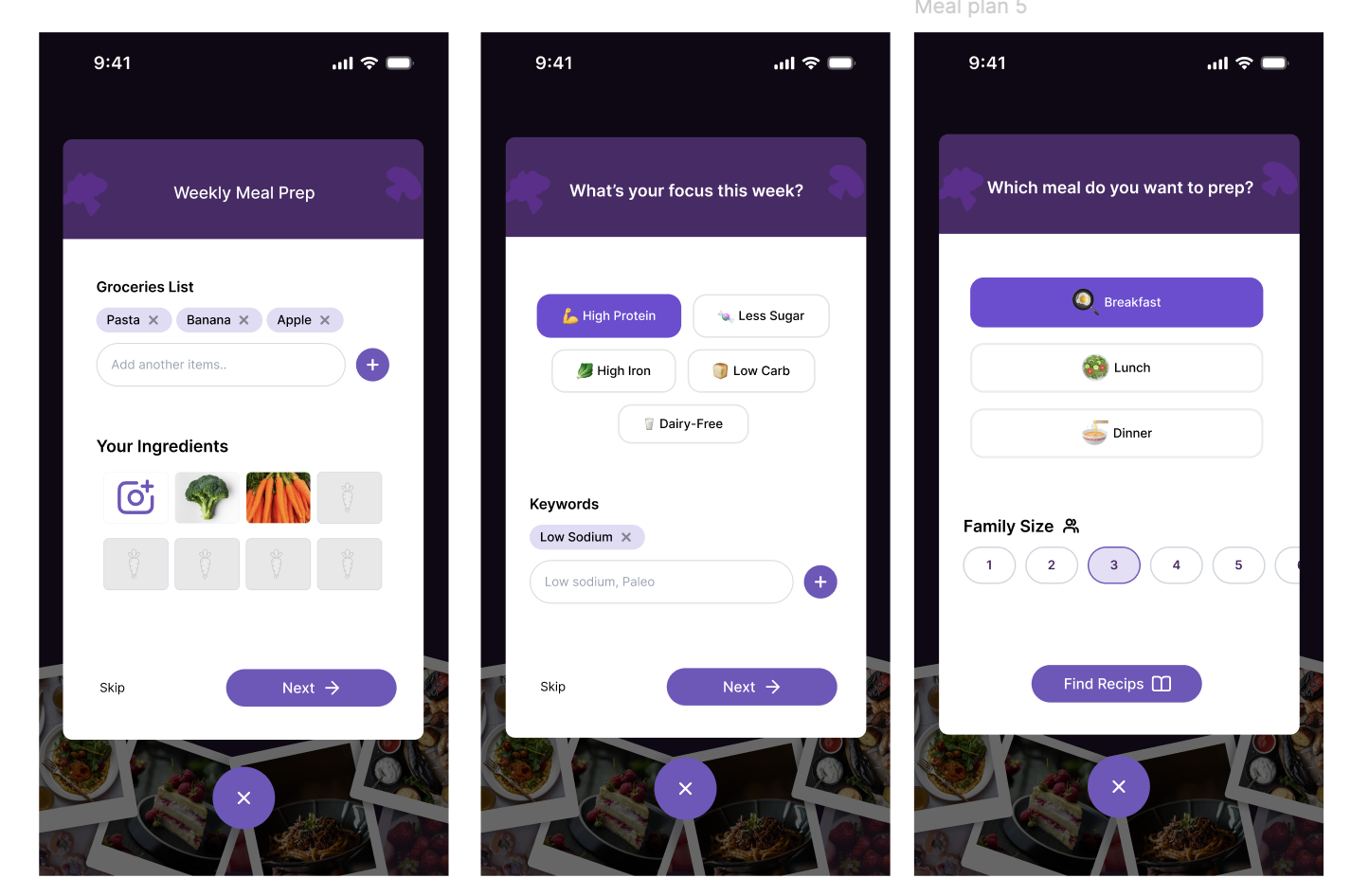
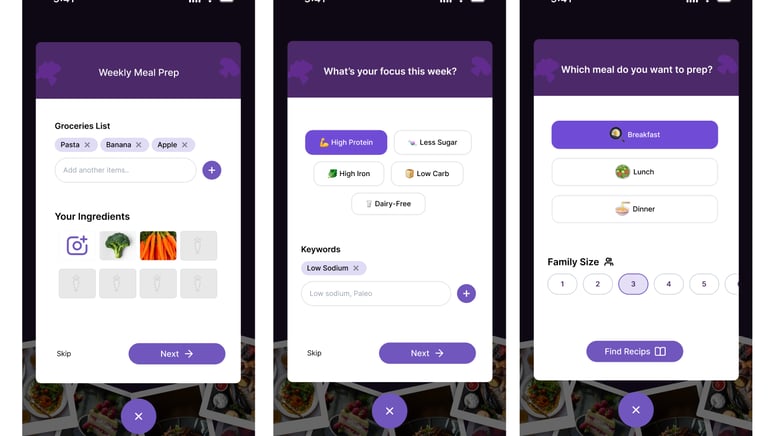
The original flow asked users to move through multiple screens — entering ingredients, answering filter questions, selecting meal type, and choosing family size — before AI could generate a single recipe. Each step added friction and cognitive load.


After
Before
The difference is visible in the designs here. The before flow offers limited filter options spread across multiple screens — yet still requires more time and decisions to reach a recipe. The after flow offers more customization options — dietary needs, meal type, family size, ingredients — all on a single screen, all accessible immediately.
More features. Fewer steps. Faster results.
The new design consolidates everything onto one screen. Users can input ingredients, set preferences, and generate personalized recipes in one place, the moment they open the app.
The result: what previously took 4 steps now takes 1.
User Testing & MVP
n=20 U.S. parents recruited via Dscout
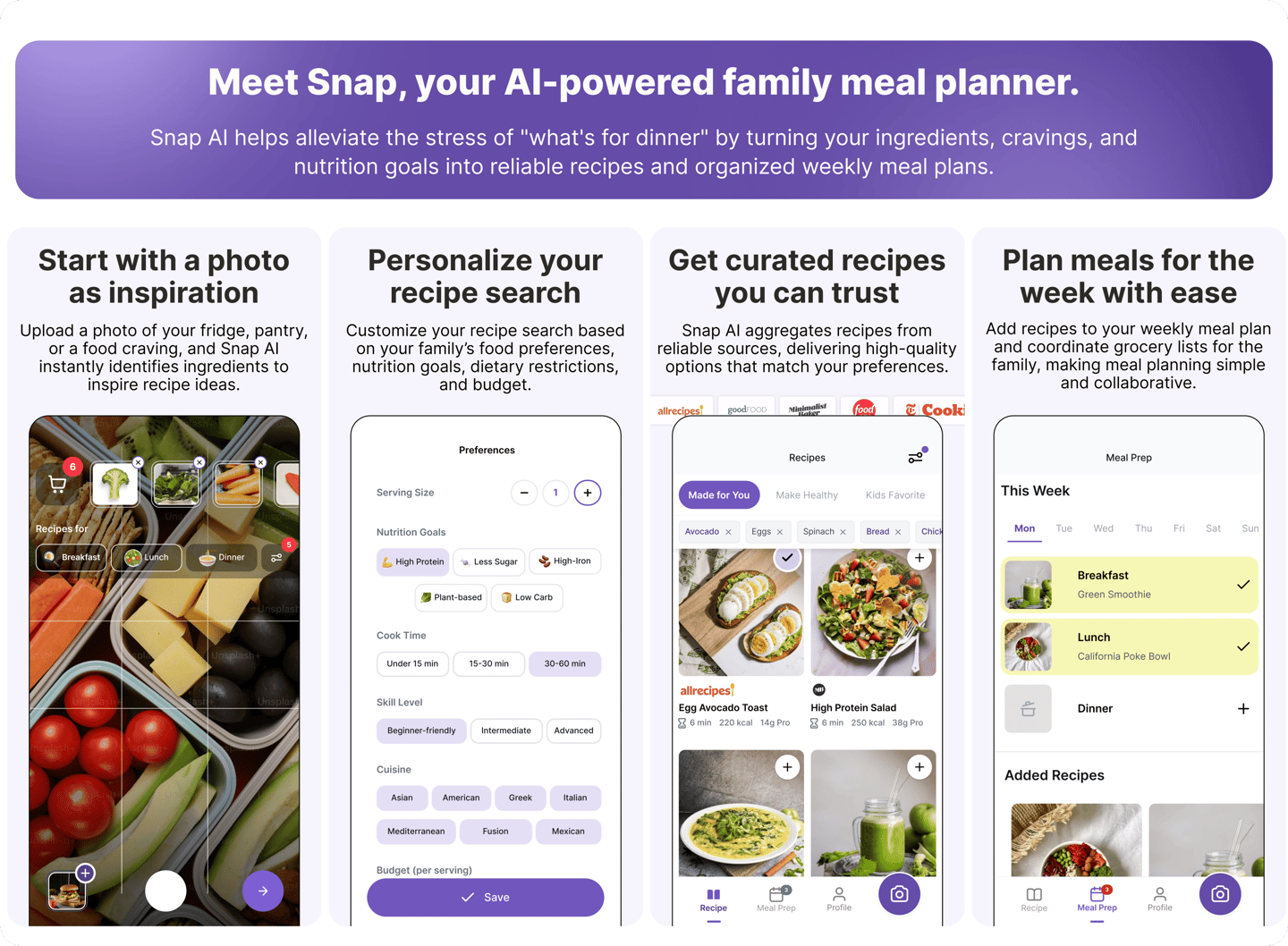
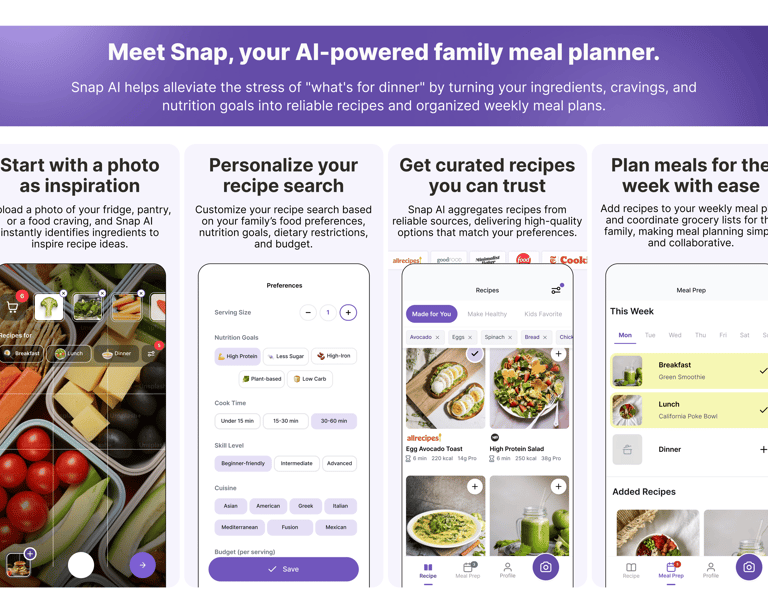
[Research Decision Box]
Why a one-pager instead of a prototype? In past studies, we found that prototypes shift users' attention to interactions and app flows — generating feedback that's out of scope for early validation. For this study, we intentionally used a one-pager to keep participants focused on feature value, not usability. This gave us cleaner, more actionable signal at this stage of the product.

Sample size (n=28 for interviews, n=15-20 for DScout)
Age: 25-55
Country: United States
Household income: $75k+
Location type: Urban or Suburban
Employment: NOT retired
Parental status: Parent/guardian to children under 18 living at home
Household composition: With partner/spouse + child
Who We Tested With:
Research Question Layers
We organized our research questions into three layers to progressively move from high-level context to feature validation. This structure helped us ground feedback in real behaviors before evaluating the perceived value of the features.
Our questions were designed around these focus areas:
Who cooks in the family
Who plans meals
Household routine


Screening criteria
Meal-planning process
Pain points & frustrations
Meal-prep frequency
Tools currently used
AI tools for meal planning




First impression of the app
Perceived features
Most valuable features
Areas for improvement
Willingness to pay
User Feedback
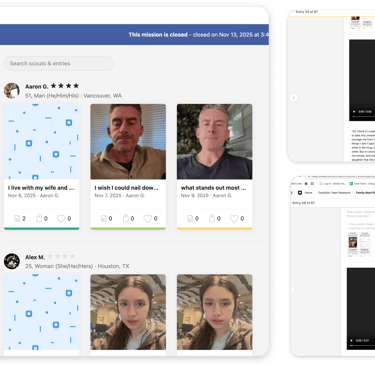
Understanding Users Through Their Words From dscout
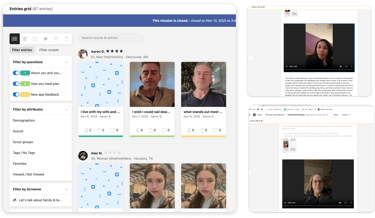
"So if somehow I could take a picture of my cupboard, and it would document everything I have or even if I had to manually input it, and then I could it would remove it as I used a recipe."
Suggesting meals based on what’s in my fridge/pantry
52%
The top preferred use cases for AI support with meal planning include
(before showing users the one pager)
Suggesting quick or low-effort meals
"If I could just save time and reduce our stress and just help everyone just be happy and eat well, it would be really good for our household."
Finding new recipes that fit our needs/preferences
"So planning meals that, satisfy everyone can be a little hard sometimes. So I would want the AI to suggest meals that balance all of our preferences."
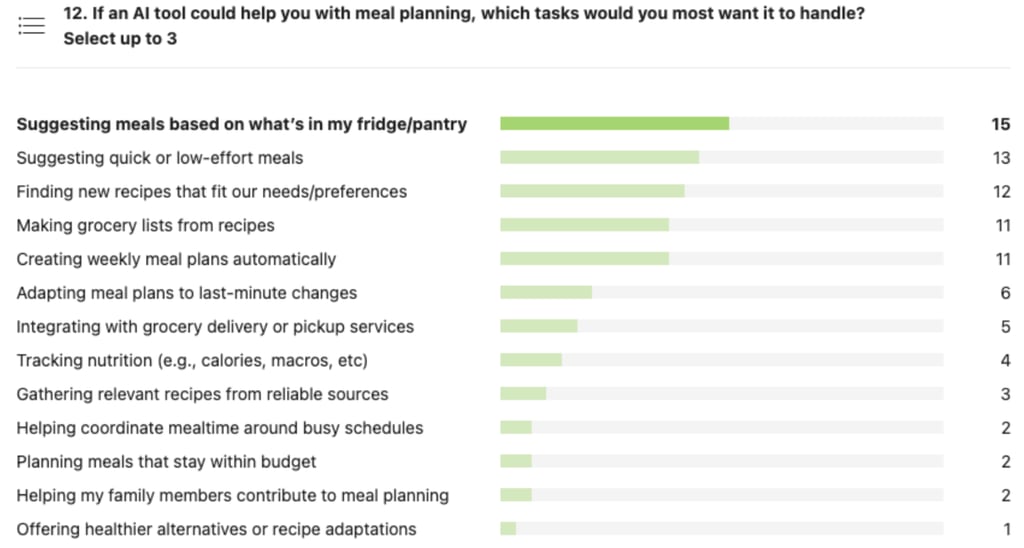

45%
41%


"The fact that it can generate things I already have in my fridge is very appealing, so I don't waste any food."
Top 3 preferred features that mentioned by users.
(after users reviewed the one pager)
Use what (ingredients) you have
"So if somehow I could take a picture of my cupboard, and it would document everything I have or even if I had to manually input it, and then I could it would remove it as I used a recipe."
"I really like the 'personalize your recipe search.' Seeing something like high protein really catches my attention. It makes me think that the AI planner could give me helpful recipes to accomplish my health goals."
One-shot inspiration
"What stands out most to me as I see this for the first time is the ability to take a picture of what’s in your fridge and have AI help create a meal plan."


Survey Respondent
Customize your recipe search to fit specific budgets, nutrition goals, or dietary needs.
Generate meal ideas based on what’s already in your fridge or pantry.


Personalized recipes
Take any idea or image and instantly turn it into a recipe or meal plan.
About 10 users are
n=9
n=9
About 9 users are
About 9 users are
n=10
likely to try the app and find it appealing.
97 %
90 %
are willing to pay for this app.
What We Learned From 20 users
79 %
feel this app idea is very unique. 69% have never heard of an app like this before.
$6-10/month is the most popular price point (41% of respondents).
Users believe the app can save time, reduce meal-planning stress, and offer helpful personalized recipes based on what they already have at home.
Users highlighted the app’s unique ability to generate personalized recipes from pantry items or photos, something they haven’t seen in other meal planners. This AI-driven “start with what you have” approach stood out as the key differentiator.


About 19 users
About 18 users
About 15 users
How Feedback Informed the Next Iteration
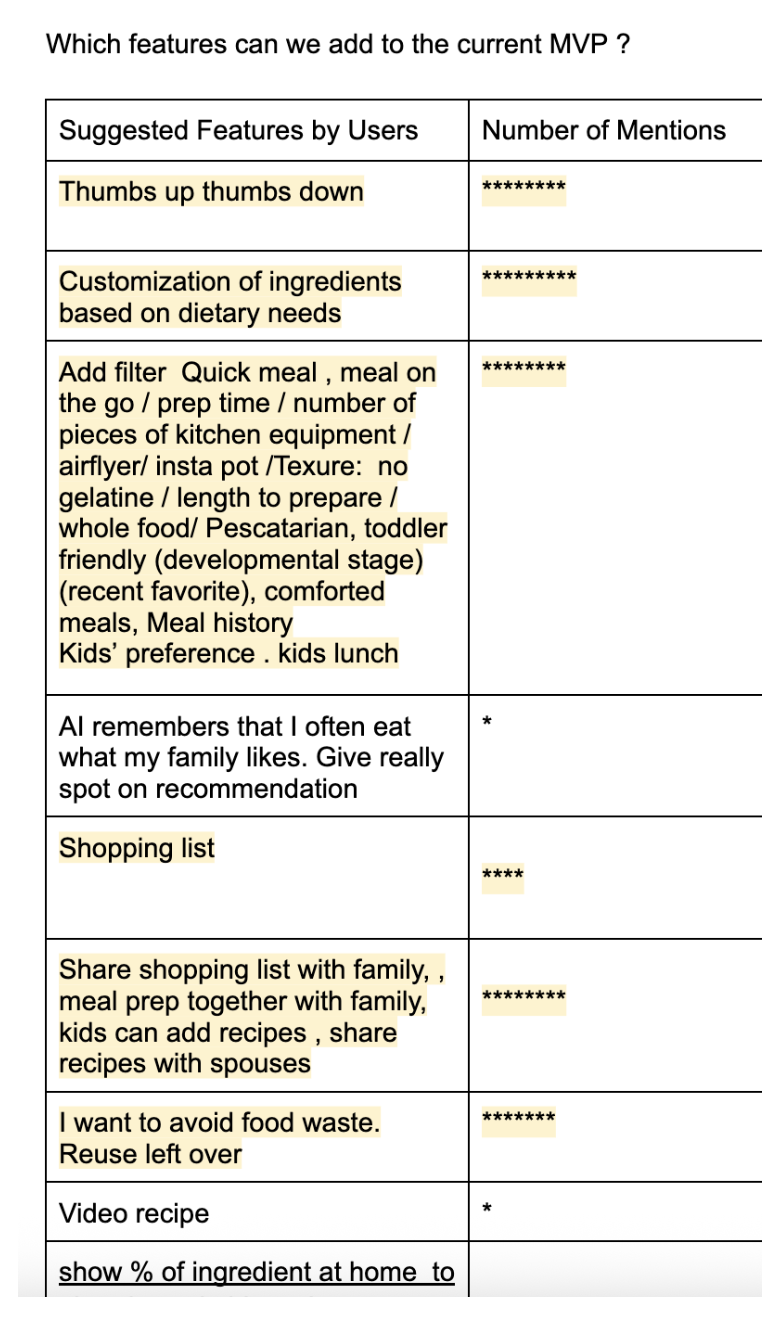
The insights from our users serve as a lighthouse, guiding us toward a better UX. Reading and watching their feedback was both exciting and inspiring. By incorporating these insights, I can continuously refine my design and create products truly centered on users’ needs.
DESIGN OPPORTUNITIES
Allow users to thumbs up or down generated recipes to improve personalization.
Support extensive customization, reflecting not just preferences but also dislikes.
Learn from meal history to understand what users and their families like and dislike.
Generate shopping lists and suggest ways for family members to contribute ingredients.
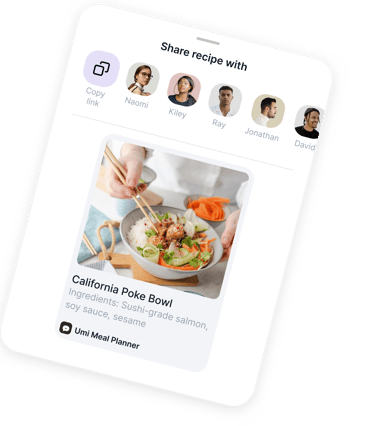
Share recipes easily with spouses and other family members.
Which features are core vs nice-to-have?
Which ones drive real behavior change?
Which ones make users come back daily?
These screens highlight key updates based on user interview insights, focusing on what matters most to them.
Final Design

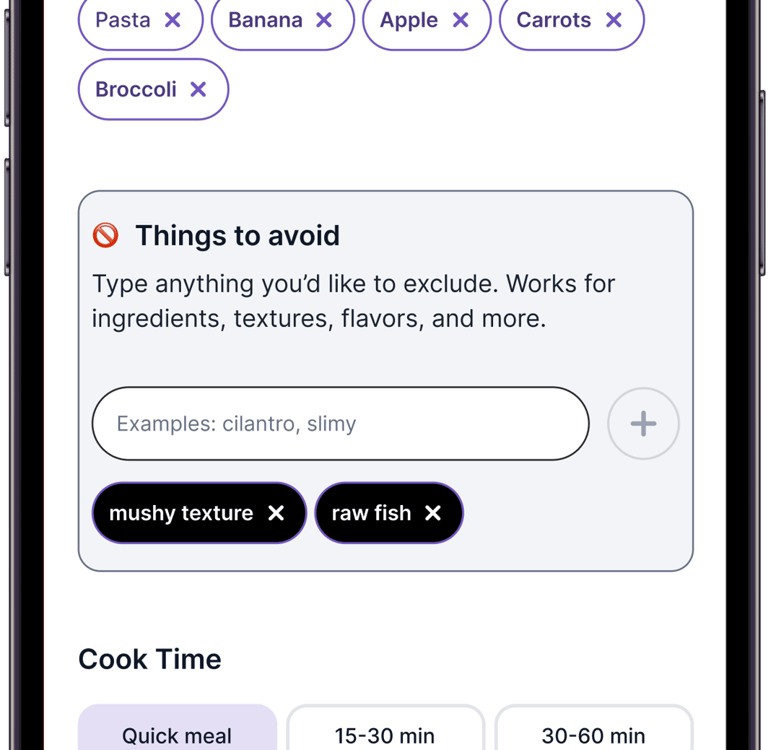
Problem (Filter Page — “Things to Avoid”)
Users said disliked ingredients mattered more than preferred ones. Even if a recipe included foods they liked, the presence of a single unwanted ingredient (e.g., raw fish, mushrooms, certain textures) made the recipe unusable. Existing tools didn’t reliably exclude those items.
Decision
I introduced a dedicated “Things to Avoid” input within filters, allowing users to type exclusions that appear as removable chips. This made restrictions visible, editable, and persistent during recipe generation.
Why This Approach
Avoidance drives decision-making. By prioritizing exclusion over inclusion, we reduced the risk of irrelevant results and strengthened trust in the AI. Making exclusions visually persistent (via chips) reinforced control and clarity.

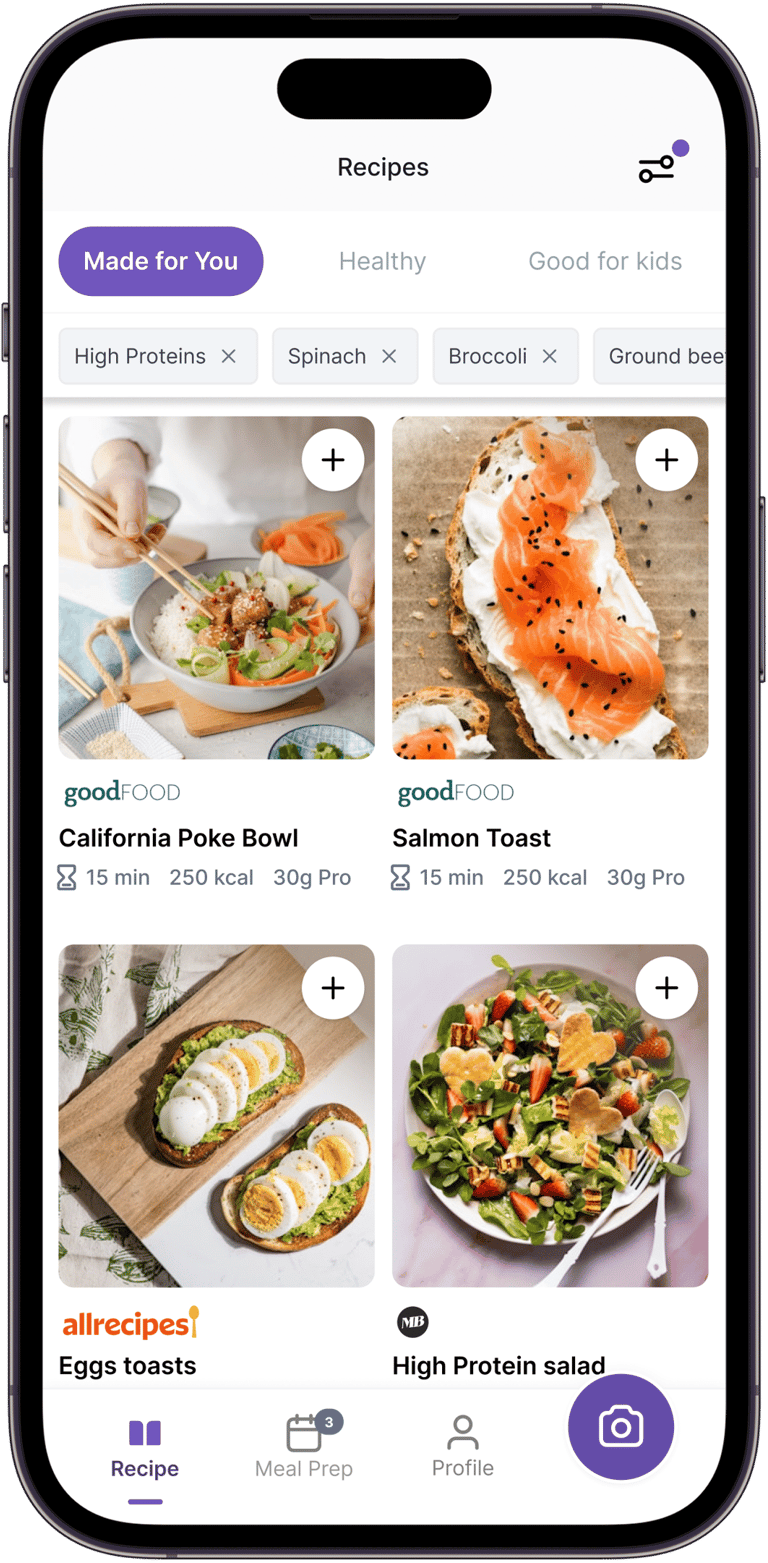
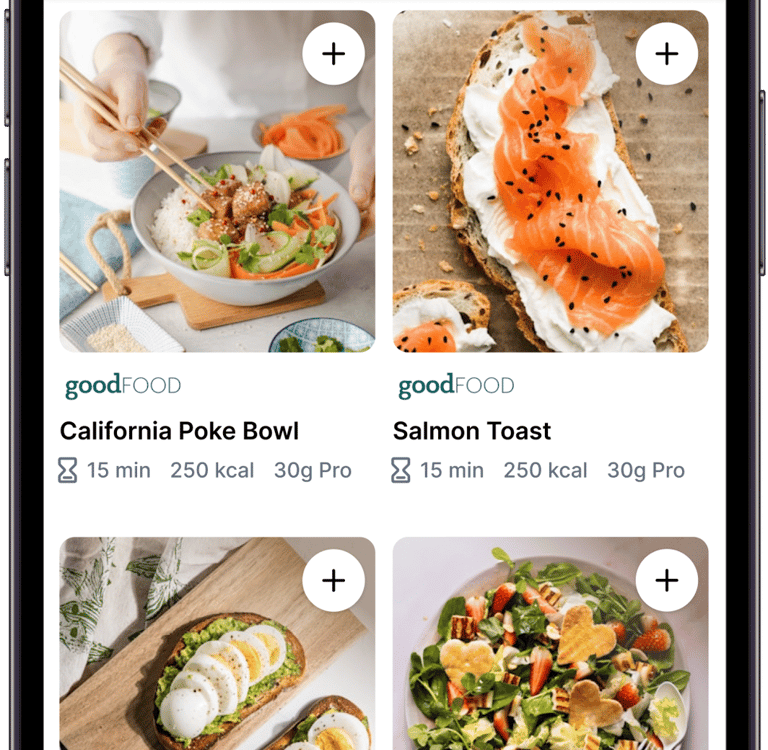
This screen acts as a trust checkpoint. Like browsing listings on Airbnb, users scan first before clicking in. By making alignment visible upfront, we reinforced confidence that the AI actually listened — reducing skepticism and increasing engagement.
Why This Approach
Decision
I designed the results page to visibly reflect user inputs. Each recipe preview highlights key ingredients, serving size, and source credibility, allowing users to quickly verify alignment before committing to read more.
Problem (Recipe Results Page)
Users were unsure whether the AI truly respected their inputs — dietary restrictions, disliked ingredients (e.g., mushrooms), and serving size. If results didn’t reflect their filters, trust in the system would break immediately.

Problem (Recipe Detail — Collaboration & Shared Shopping)
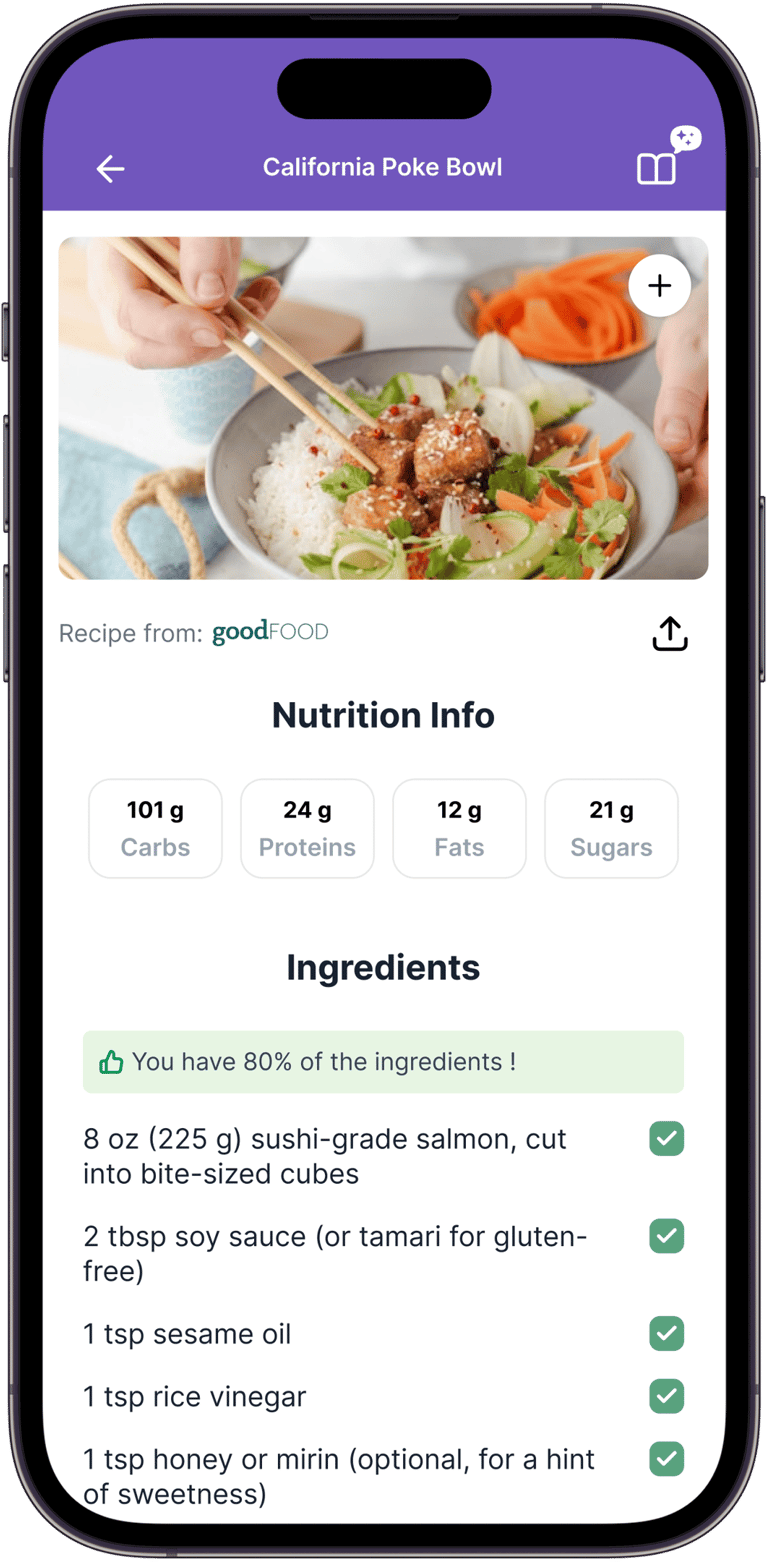
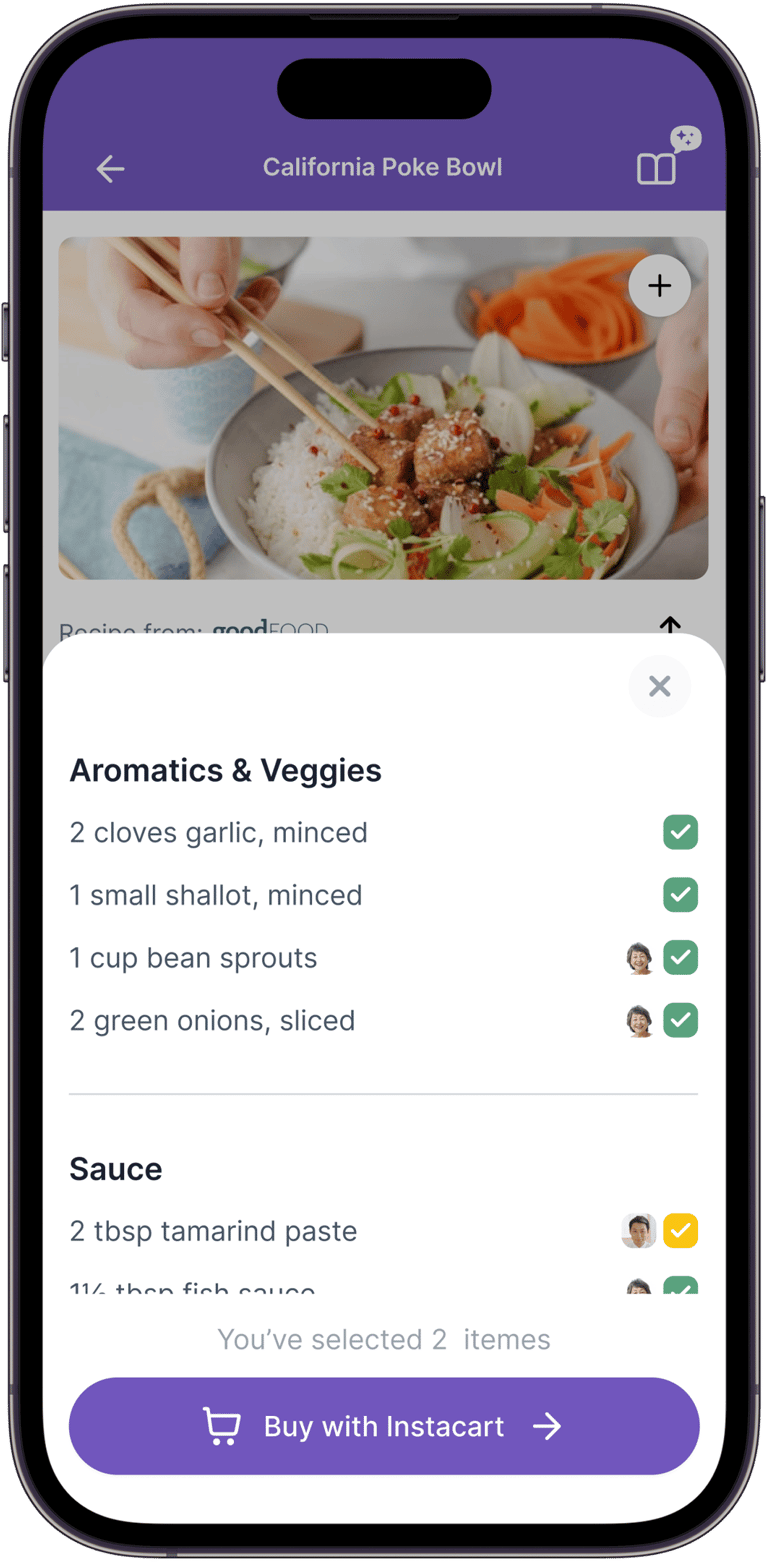
The primary cook often carries the mental load of planning, buying, and organizing ingredients alone. Users wanted an easier way to coordinate with family — especially when multiple people could help shop or prepare.
Decision
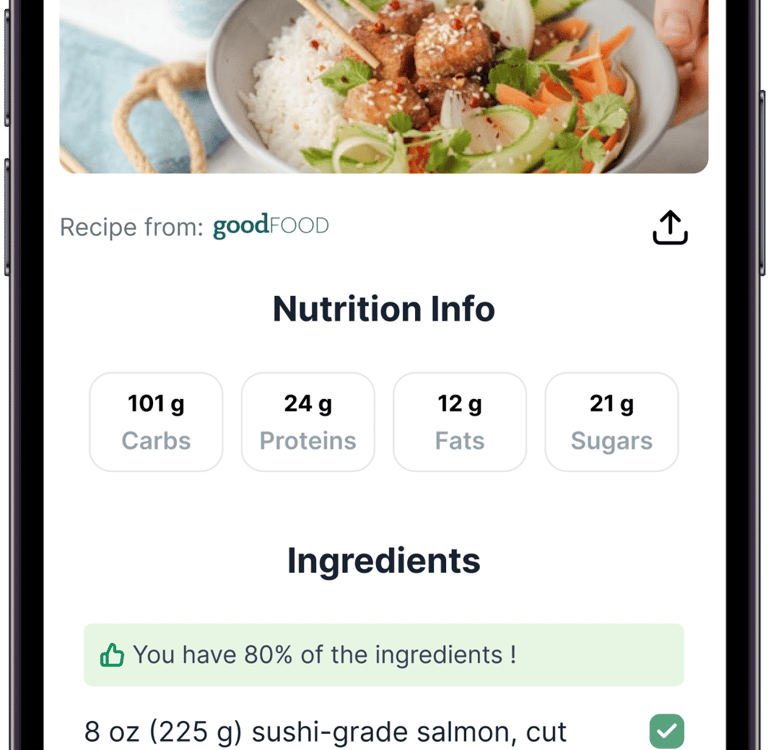
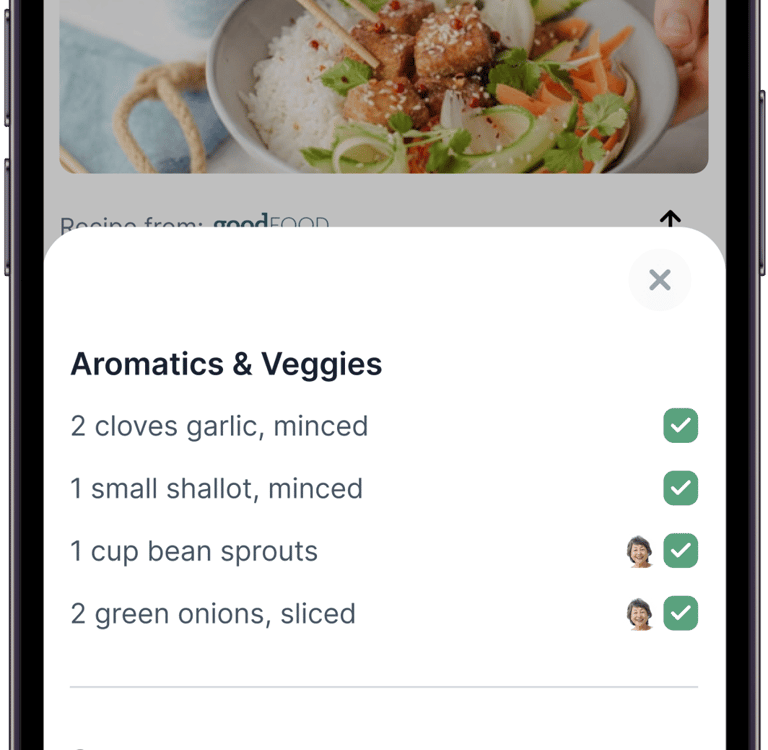
On the recipe detail page, I integrated collaborative ingredient tracking. The system shows how many ingredients users already have, and allows shared checklists where family members can claim items. Recipes can also be shared directly, with optional grocery ordering integration.
Why This Approach
Once a recipe is chosen, the real friction begins — shopping and coordination. By embedding collaboration directly within the ingredient list (instead of creating a separate tool), I reduced planning stress and turned meal prep into a shared responsibility.
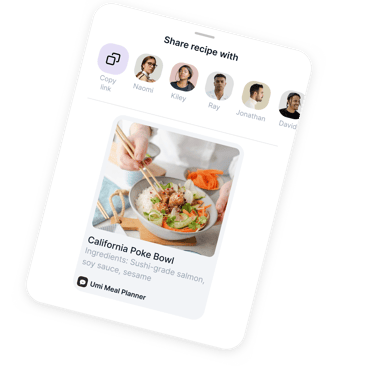
Invite your crew to start collaborating.

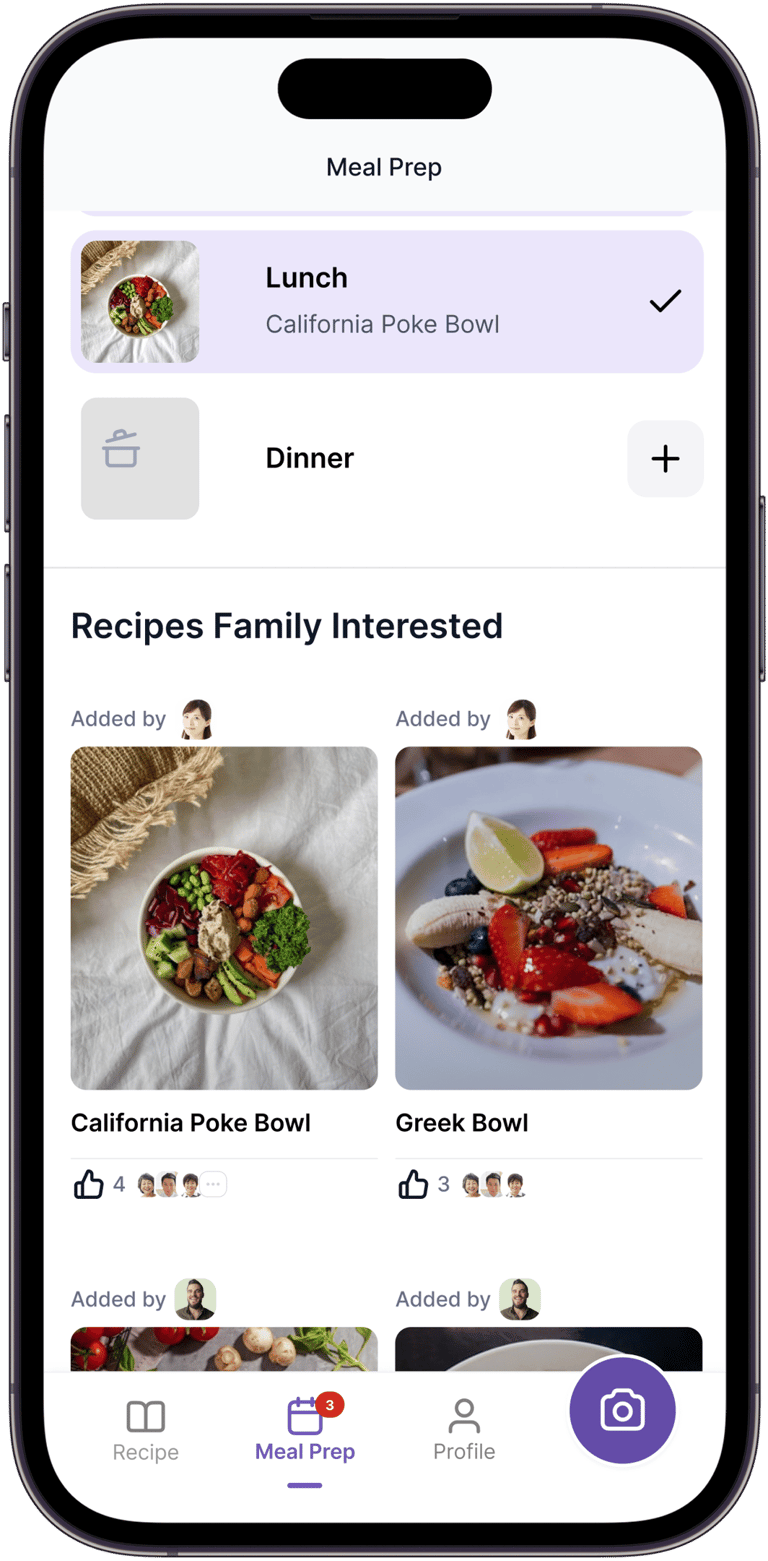
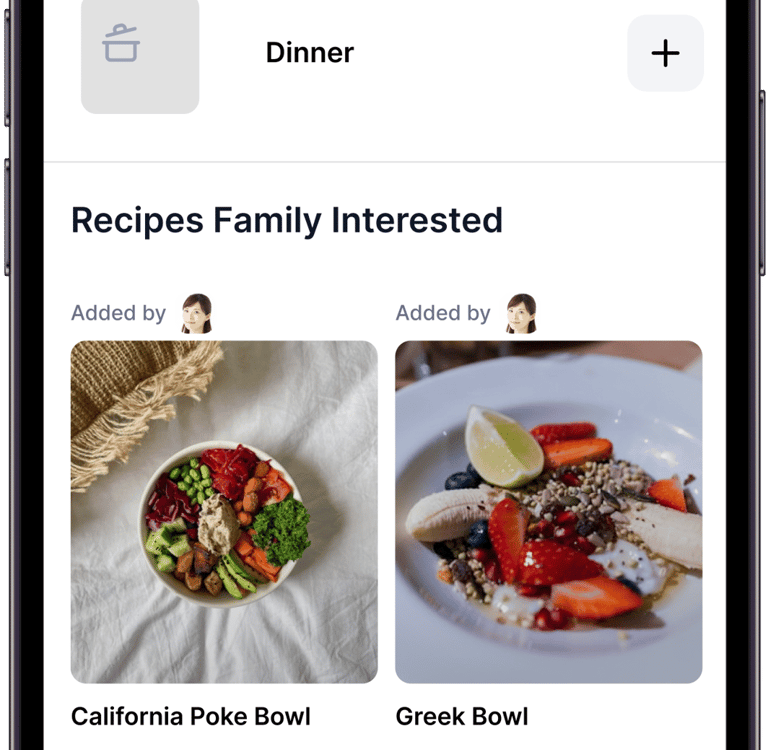
Meal planning is a group decision. By centralizing saved recipes and making preferences visible, I reduced friction in choosing what to cook. The voting data also creates a foundation for smarter AI recommendations based on real family behavior.
Why This Approach
Decision
I integrated voting directly into the Meal Prep section. Family members can add recipes they’re interested in and upvote options they prefer, with visibility into who added and who voted for each dish. A shared meal history also tracks preferences over time.
Problem (Recipe Voting & Family Preferences)
When multiple recipes were shared within a family, there was no clear way to know who preferred what. Decision-making often stalled because feedback lived in scattered messages or wasn’t visible at all.
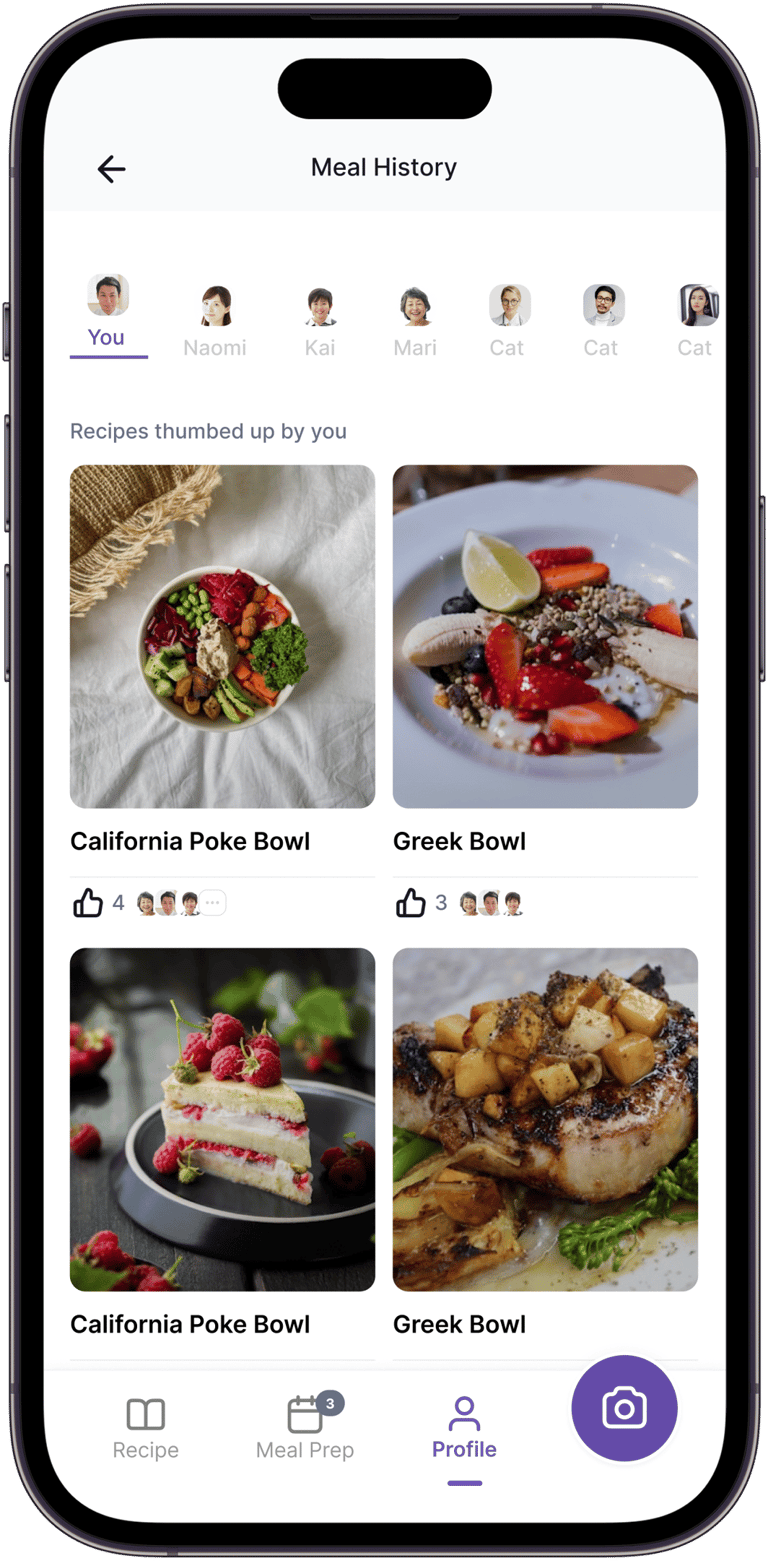
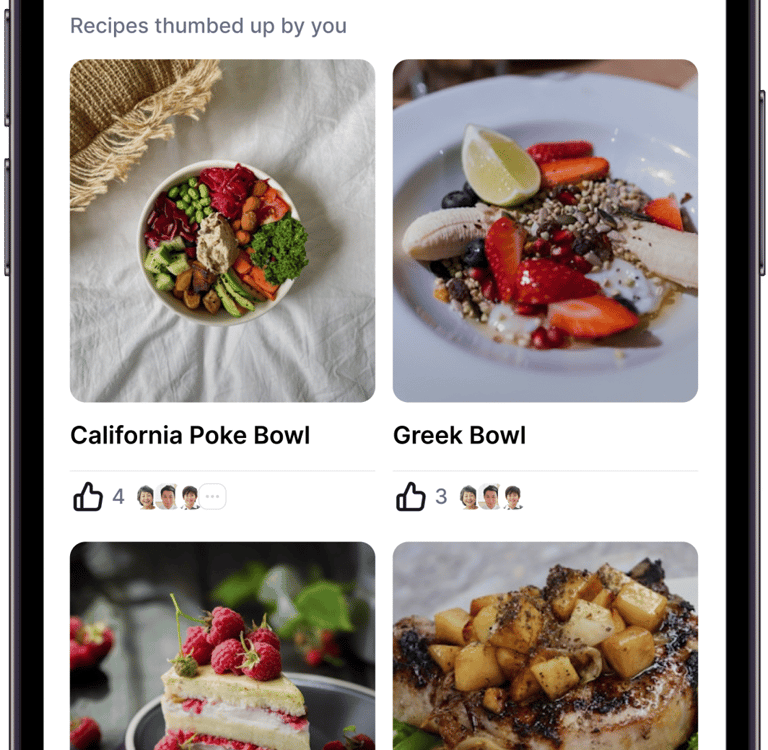
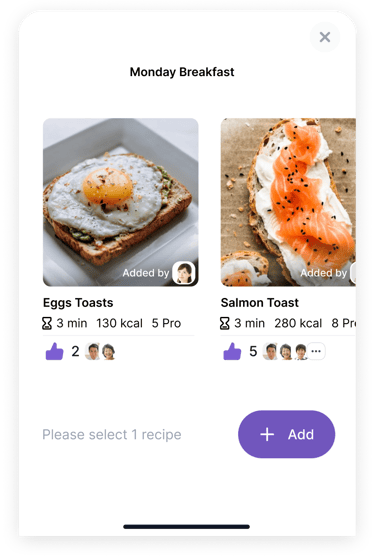

I also designed a Meal History section under the profile, where users can see what recipes each family member has added or voted for. This gives a quick overview of family preferences and helps the AI learn what types of meals are most liked for future recommendations.
Meal History (Profile Feature):
Case Study Summary
Families often struggle to plan meals that everyone will actually enjoy, leading to stress and repetitive dishes. Through user interviews, surveys, and research, I discovered that extreme customization and family collaboration were the most important needs.
The design solution includes AI-generated recipes from reputable sites, advanced ingredient and dietary filters, and family voting on preferences. These updates allow families to find meals everyone will enjoy, contribute to planning, and save time, while helping AI learn individual and family tastes.


See how I designed a meal planning tool for families—
view the full case study on desktop.